
05/28/2026 by Dr. Goldi Jacques-Maynes
Why Feeding Your Baby Hurts Your Neck, Wrists, and Back
You spend hours every day feeding your baby. As a new parent, it’s a major part of the job description.
And like any more-than-full-time job, your body will begin to show the effects of repetitive strain.
In fact, quite a few musculoskeletal problems come from feeding a baby.
It might seem weird, but you may start to notice that…
Even though you’re mostly sitting still, your entire body hurts.
Your neck feels locked up.
Your shoulders creep toward your ears.
Your wrists ache every time you pick up your baby.
Your low back throbs when you finally stand up after feeding.
Many new moms assume this is just part of postpartum life.
And while this pain is incredibly common, it’s not at all required.
Most pain from feeding is easily treatable.
Here in our Aptos office, we see a lot of postpartum moms dealing with feeding-related pain.
They’re exhausted, overstimulated, and trying to care for everyone else while quietly ignoring signals from their own body.
Feeding a baby can create a lot of strain. Chiropractic can help.
How does feeding put so much strain on your body?
Feeding a newborn is repetitive, physical work.
You’re holding the same positions for long periods of time while your body is still healing from pregnancy and birth.
At the same time, your joints and ligaments may still feel loose from the hormone relaxin.
Your core and pelvic muscles are recovering.
You’re probably sleeping less, moving less, and spending hours every day looking down at your baby.
All these small, simultaneous, stresses start adding up.
Most moms don’t notice how much tension they’re carrying until their body finally starts protesting.
Here’s what’s happening:
“The feeding hunch” is overloading your neck and shoulders.
I see this posture constantly in postpartum moms.
Shoulders rounded forward.
Upper back curved.
Head tilted down.
Over time, that position overloads the muscles in your neck, shoulders, and upper back.
Then the symptoms come:
- Neck stiffness
- Tight shoulders
- Headaches
- Pain between the shoulder blades
- Feeling “stuck” or locked up after feeding sessions
Cluster feeding can make this even worse because your body barely gets a chance to reset between sessions.
Sometimes moms don’t even realize how uncomfortable they are until they finally stand up and try to move again.
Your wrist and thumb are actually doing some serious work.
Many moms expect back pain after having a baby.
They do not expect feeding to injure their wrists and thumbs.
But think about how often you lift, support, reposition, rock, and carry your baby every day.
Now combine that with awkward wrist positions, repetitive thumb strain, poor arm support, and exhaustion.
Your tendons eventually start asking for help.
Many new moms notice:
- Thumb pain
- Wrist soreness
- Weak grip strength
- Sharp pain while lifting your baby
- Aching hands after nursing or pumping
Sometimes moms tell me they feel like their wrists are “failing” them.
The good news is that this usually responds very well to early care.
Many feeding positions strain your low back and hips.
Feeding doesn’t just affect your upper body.
Many moms also develop low back, hip, and pelvic pain from prolonged sitting and unsupported feeding positions.
Soft couches, uneven posture, side leaning, and weak postpartum core muscles can all contribute to lower body strain.
This is especially common after long labors, C-sections, or difficult deliveries.
You might notice:
- Low back ache
- Hip tightness
- Pelvic instability
- Sciatic-type discomfort
- Pain standing up after feeding
It can feel counter-inutitive, but sitting can become physically exhausting.
And on top of all that fatigue: your nervous system just doesn’t want to shut off.
Postpartum pain is not only from physical strain and biochemical changes.
Many new moms tend to function in a constant state of nervous system overload.
Your body is always “on.”
Listening for crying.
Feeding around the clock.
Sleeping lightly.
Rarely fully relaxing.
Over time, your muscles can start holding tension continuously because your nervous system never truly settles.
Many moms come into my office carrying so much more than physical strain.
Along with pain and discomfort, they bring in:
- Overwhelm
- Mental exhaustion
- Emotional depletion
- Pressure to hold everything together
As a mom myself, I know how easy it is to put your own body last.
But your body still deserves care.
In fact, you don't just deserve care, you NEED it.
There’s a problem with “just pushing through” the pain.
Many moms minimize their symptoms because they believe discomfort is simply part of motherhood.
And yes—postpartum recovery is hard.
But ignoring pain doesn’t usually make it disappear.
Without support, small problems can become chronic ones.
Over time, moms can develop:
- Chronic wrist and thumb pain
- Ongoing neck tension and headaches
- Persistent low back instability
- Poor posture patterns
- Increased strain on the pelvic floor and core
- More painful and exhausting daily movement
I especially worry when moms stop noticing how uncomfortable they are because they’ve adapted to functioning in pain.
Adapting to pain often means making your condition worse, instead of intervening earlier when problems are easier to fix.
You don’t have to commit to feeling more pain, more tension, more exhaustion, more frustration and overwhelm.
You deserve to feel better, and you can.
Pay attention to these early signs that your body needs support:
It’s a good idea to come in before the pain becomes severe.
Some early warning signs include:
- Neck stiffness
- Shoulder tension
- Wrist or thumb pain
- Headaches
- Numbness or tingling
- Low back fatigue
- Pain after feeding sessions
- Feeling physically depleted all the time
Your body is asking for support—please listen and get that support.
Postpartum chiropractic care can help.
Postpartum chiropractic care is gentle, supportive, and personalized to your stage of healing.
We start by listening carefully to what your body is experiencing.
We look at how you’re moving, feeding, carrying your baby, and holding tension throughout the day.
Depending on your needs, care may include:
- Gentle chiropractic adjustments
- Soft tissue work for tight muscles and irritated tissues
- Feeding and posture recommendations
- Movement coaching
- Supportive stretches and exercises
- Massage therapy with our in-house team
- Nervous system support to help your body relax and recover
We also understand that postpartum bodies need flexibility and compassion.
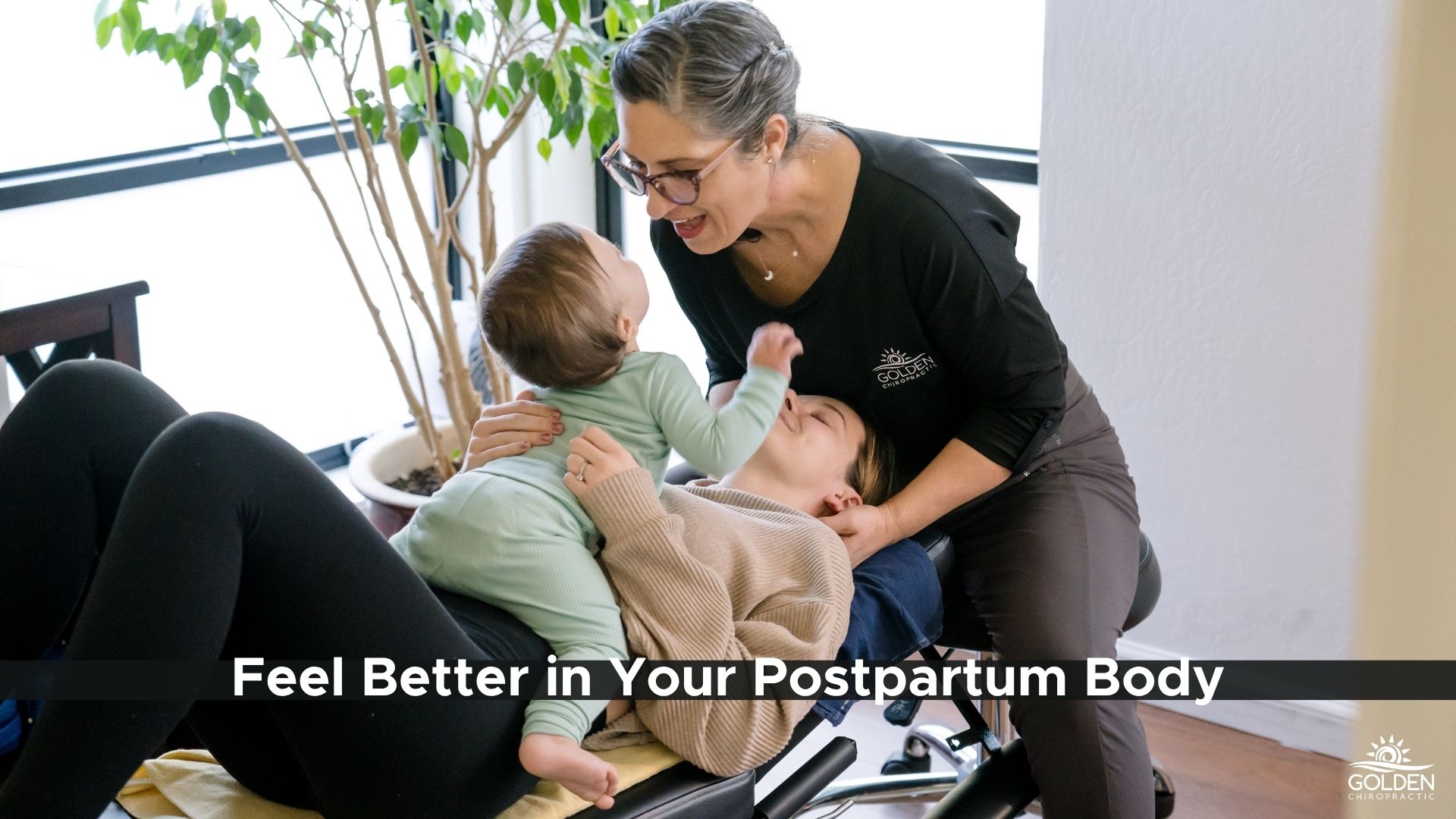
You can bring your baby.
You can nurse during your visit.
You can pause, regroup, and take your time.
We will always meet you where you are.
Let us take care of you while you take care of your baby.
You spend so much time caring for your baby.
You deserve care, too.
If feeding your baby is leaving your neck, wrists, back, or hips hurting, we can help.
Our chiropractors provide gentle, family-centered postpartum care here in Aptos.
We also offer restorative massage therapy.
Easy online scheduling makes getting care simpler during this busy season of life.
Come see us. Feel better in your body and enjoy your new baby more.