
09/24/2026 by Dr. Joe Bell
Why Is Your Neck Stiff?
Have you ever woken up, turned your head, and noticed that your neck feels stiff?
It’s a pretty common occurrence.
Most of us experience neck stiffness from time to time.
And you may think that your neck discomfort came from sleeping in a weird position or spending too much time at your computer.
And that could be true, especially if the pain or stiffness doesn’t come back or escalate.
But if that stiffness keeps coming back—or starts turning into neck pain, headaches, or difficulty moving—you may need to have it checked out.
You don't necessarily have to injure your neck for it to become painful or stiff.
Most neck stiffness comes from repeated neck movements throughout your day, every day.
Why does your neck feel stiff if you didn’t injure it?
Your neck is designed to move.
It helps you look up, down, and side to side.
It supports your head while you work, drive, exercise, scroll, carry kids, lift things, and do pretty much everything else in your day.
All of those activities place different demands on your neck.
And usually, your body handles those demands just fine.
But sometimes the joints and muscles in your neck stop moving or responding as well as they normally do.
You might notice:
- Neck pain or aching
- Stiffness or restricted movement
- Pain when turning or tilting your head
- Tight muscles around your neck and shoulders
- Headaches that seem to start in your neck
- Discomfort after sitting or using a screen
- Difficulty finding a comfortable sleeping position
- A feeling that your neck is “stuck” or constantly needs to be stretched
Neck pain can quietly change the way you move.
One of the interesting things about recurring neck pain is how good we become at working around it.
Maybe you turn your whole body instead of your head when you're backing out of a parking spot.
You avoid looking up.
You skip an exercise that tends to aggravate your neck.
You stretch your neck over and over throughout the day.
Or you keep changing positions because nothing feels comfortable for very long.
Sometimes those little adaptations become so normal that you barely notice you're doing them.
Meanwhile, the underlying problem may keep coming back.
Over time, people can experience repeated flare-ups, reduced activity, compensation through the shoulders and upper back, or even become apprehensive about certain movements.
That's when we want to figure out why your neck keeps asking for your attention.
There could be many causes, but one very common cause is cervical joint dysfunction.
What is cervical joint dysfunction?
Your cervical spine is the portion of your spine that makes up your neck.
Cervical joint dysfunction happens when the joints in this area become stiff, irritated, or aren't moving as well as they should.
There's not always one big event that causes it.
Everyday factors like:
- Stress
- Sleep
- Physical activity
- Sustained positions
- Repetitive movements
- Work demands
- Sports
- Previous injuries
- Changes in strength or mobility
can all play a role.
Daily demands on the neck look different for everybody.
For new moms and parents, it might be hours spent feeding a baby, carrying a toddler, or turning around in the car to check on your kids.
For desk workers, it might be noticing your neck getting progressively stiffer as the workday goes on—and repeatedly stretching or changing positions just to stay comfortable.
For athletes, it might be a certain movement that starts bothering you during training, or neck stiffness that makes you wonder whether you should modify your workout.
For manual laborers, lifting, carrying, and repetitive tasks can make you increasingly aware of your neck throughout the workday.
For teens, school, screens, studying, and sports can create their own combination of sustained positions and physical demands.
For adults 65+, changes in mobility and strength can contribute to recurring stiffness that makes everyday movement less comfortable.
None of these lifestyle factors mean you're doing something “wrong.”
Your body is simply responding to what you're repeatedly asking it to do.
Often, it's the accumulation of repeated demands over time, rather than a single injury that brings about the pain and discomfort.
I recently saw a mom who just wanted to turn her head without pain.
One of my patients is a 35-year-old mom with a newborn and a toddler.
She was frustrated by how frequently her neck was bothering her.
Holding her children was one of her biggest triggers.
She kept trying to find a more comfortable position, but nothing seemed to give her lasting relief.
Eventually, even normal activities became difficult.
Driving to the grocery store hurt.
Turning her head to check on her kids in their seats hurt.
Her range of motion was becoming limited, and she was understandably getting apprehensive about movements that might make the pain worse.
She was hesitant to try chiropractic care, but she also didn't want to rely on Tylenol every day just to get through her normal routine.
During her evaluation, I found that the facet joints in the middle portion of her cervical spine weren't allowing her neck to move through its full range of motion.
The surrounding soft tissue was also swollen, rigid, and tender.
Certain directions of movement consistently increased her pain.
I diagnosed cervical joint dysfunction.
We started with heat and myofascial work to calm the irritated area and improve blood flow.
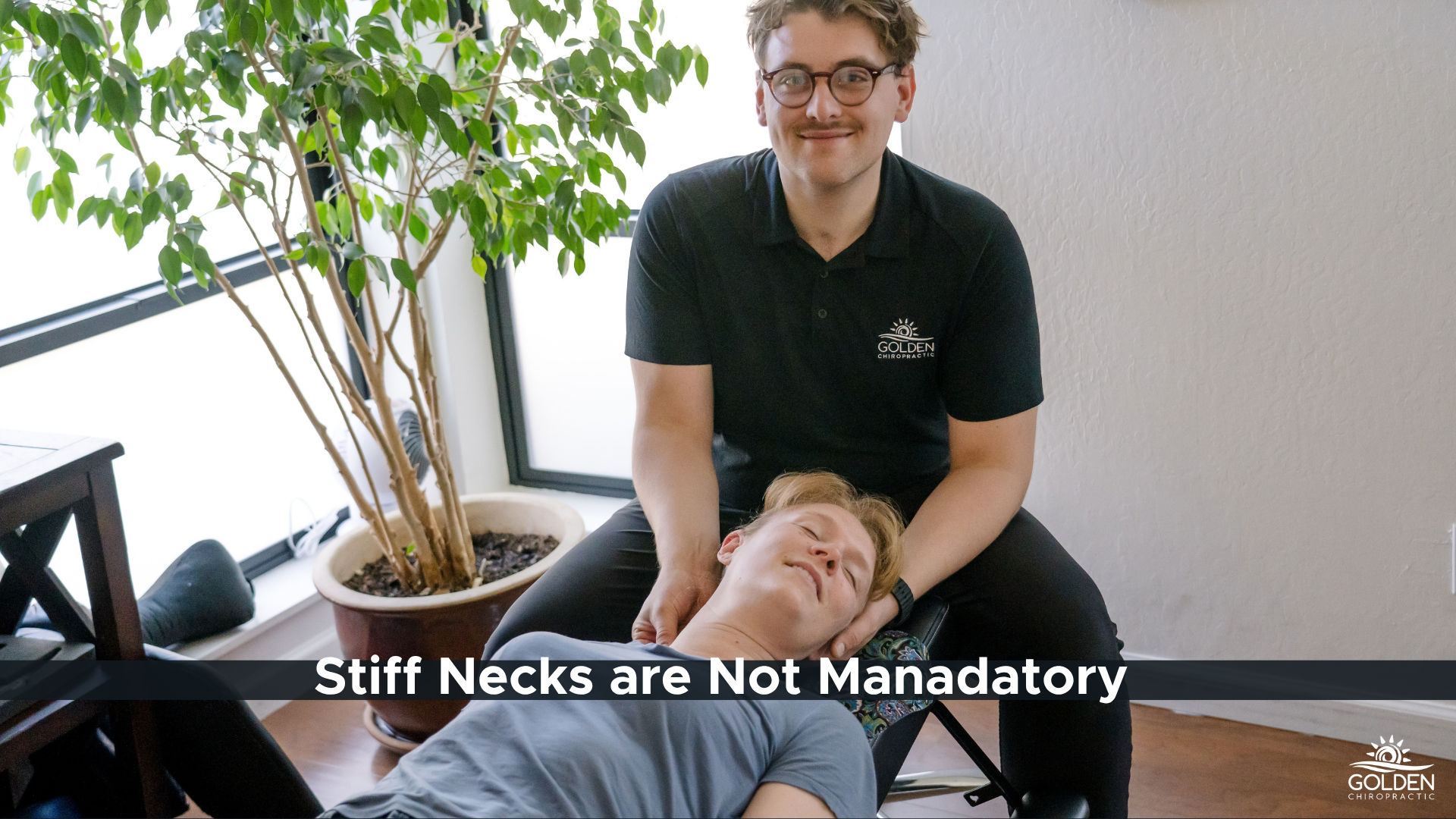
From there, we used chiropractic manipulation to restore her range of motion.
Eventually, she started seeing improvement during her everyday activities.
Breastfeeding and carrying her kids became easier.
She could turn her head more comfortably.
And she wasn't approaching every normal movement wondering whether it was going to hurt.
That meant less discomfort—and less stress.
Helping patients manage neck pain to improve their function during daily life is a big part of my job.
You may have already guessed that chiropractors evaluate and treat recurring neck pain and stiffness quite a lot.
One of the first reasons a new patient comes to see us is neck pain.
When I look for possible causes, I'm not simply looking for something “wrong” with your neck.
I need to understand why it's becoming painful or restricted in the first place.
This is how I might arrive at a diagnosis of cervical joint dysfunction, or any number of other conditions of the neck.
Depending on what you're experiencing, an evaluation may look at:
- Neck mobility
- Strength and endurance
- Movement patterns
- Posture and sustained positions
- Your upper back and shoulders
- Work or training demands
- Previous injuries
- Activities that consistently aggravate your symptoms
That gives me a much better idea of what your particular neck needs.
Treatment can then be individualized and may include:
- Hands-on techniques
- Mobility work
- Strengthening work
- Movement retraining
- Ergonomic or activity modifications
- Exercises you can do at home
The solution generally isn’t too complicated.
We just need to help your neck move better to tolerate the demands your life is currently placing on it.
What are the signs that your life is placing too much demand on your neck?
If you notice occasional neck stiffness, it just may settle down on its own.
But if your neck pain or stiffness is persistent, keeps coming back, or is starting to change how you work, sleep, exercise, drive, or move?
You may want to get a professional evaluation.
And there are some neck pain symptoms that shouldn't wait.
Seek prompt medical attention if you experience:
- Neck pain with significant weakness or loss of coordination
- New difficulty walking or balancing
- Loss of control of your bowel or bladder
- Significant neck trauma
- Fever or serious illness
- A sudden severe headache
- Neurological symptoms
Most neck pain doesn't fall into those categories.
But you also shouldn't wait until your neck pain becomes severe to do something about it.
If you’re worried about your neck pain or stiffness, we can evaluate whether conservative treatment will help, or we can refer you to a specialist if we suspect your diagnosis is out of our scope.
We’re here to help you figure things out and get the best care for your specific condition.
Want to move through your day without constantly thinking about your neck?
That's really what we're working toward.
Not perfect posture.
Just spending your whole day NOT thinking about whether you're sitting, sleeping, lifting, or moving correctly.
We can get you to a place where your neck isn’t constantly asking for attention.
If you've been dealing with recurring neck pain, headaches, or that familiar “ugh, my neck is stiff again” feeling, our chiropractors can help you figure out what's contributing to it.
Often, a few targeted changes—and the right care—can make everyday movement feel a whole lot easier.
Book your appointment online to come see us in Aptos when it’s time to give your neck the care it’s asking for.