
04/29/2026 by Dr. Goldi Jacques-Maynes
Exercises for Pregnancy: Support Comfort, Movement, and Baby Positioning
Pregnancy changes your body—a lot. And these constant changes can make you kind of miserable.
You feel uncomfortable pressure. You have pain and discomfort in places you never felt it before:
Low back pain.
Pelvic tension.
Trouble getting comfortable at night.
That heavy feeling that shows up more as the weeks go on.
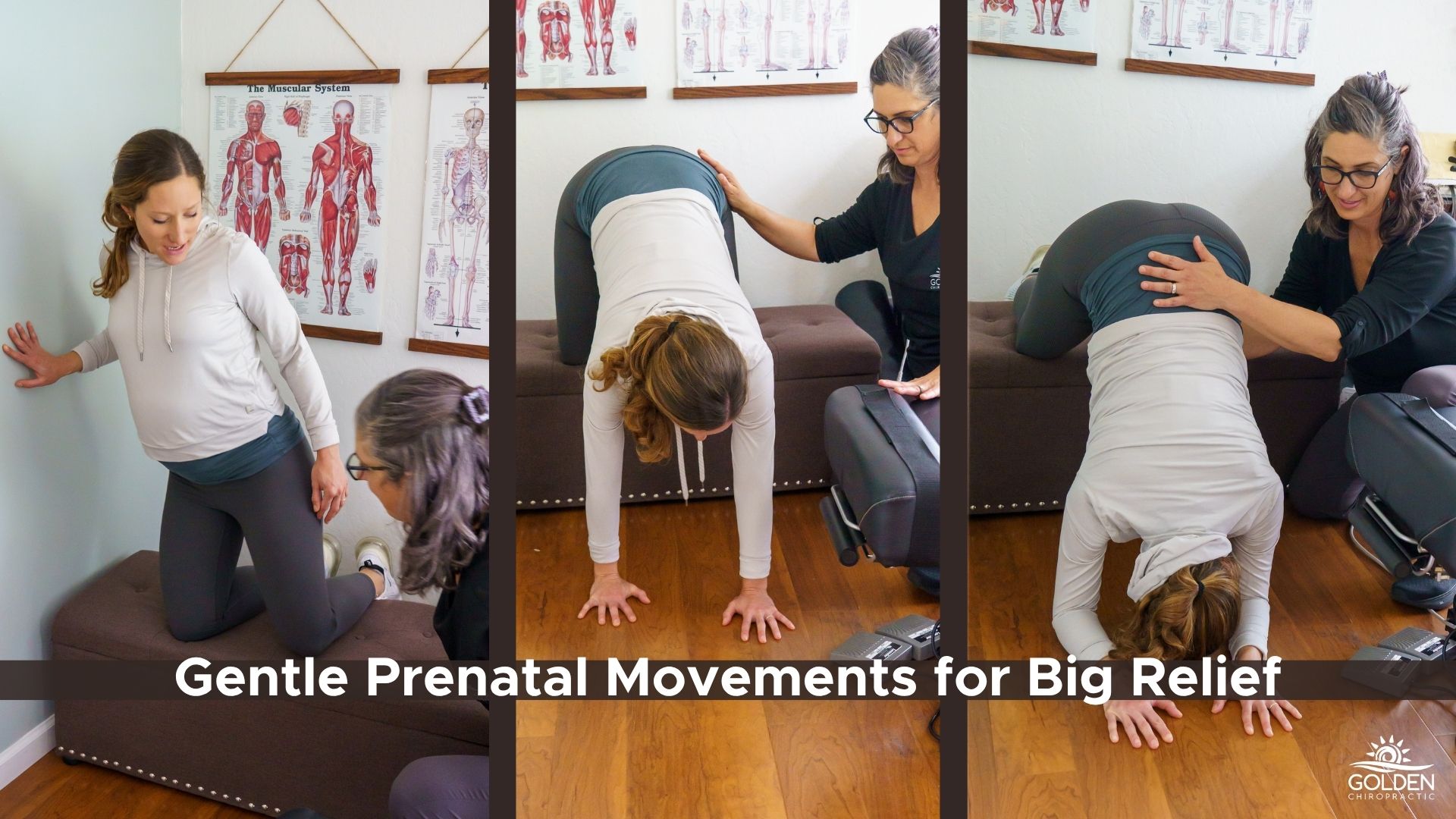
As your body adapts, the right kind of movement can help you feel more comfortable during this process of growing a tiny human.
Simple, intentional movements can:
- Reduce tension
- Create space
- Help your body function a little more comfortably
Gentle movement makes a huge difference during pregnancy.
Pregnant bodies make adjustments to help you grow the baby and give birth:
- Ligaments soften
- Your center of gravity shifts
- Your pelvis and spine take on new loads
That’s why so many people experience:
- Low back and sacral pain
- Hip tightness or instability
- Pelvic pressure or discomfort
- Wrist pain and swelling
- Difficulty getting comfortable to rest
Gentle movement helps by:
- Improving circulation
- Reducing built-up tension
- Supporting joint mobility
- Helping your nervous system settle
And in many cases, it can also:
- Create more space in the pelvis
- Support baby’s positioning
- Make daily movement (and even labor) feel more manageable
Gentle movement is essential for a more comfortable pregnancy.
That's why I often recommend specific exercises as part of a customized care plan for my prenatal patients.
These therapeutic exercises for prenatal patients help with:
- Mobility: keeping joints moving so nothing gets stuck or overloaded
- Stability: supporting the pelvis and spine as your body changes
- Tension relief: easing the areas that tend to hold stress (low back, hips, pelvic floor)
- Space creation: giving baby more room to move and settle into a good position
- Nervous system support: helping your body shift out of constant tension mode
This blog covers the exercises I most prescribe.
The prenatal exercises listed below are most helpful when done in accordance with an overall treatment plan.
Before you start any new exercise program, please make sure to check with a trusted prenatal healthcare provider.
Prenatal Exercise Directory
Full alphabetical list of exercises:
Belly Taping with Kinesiology Tape
Shake Them Apples (Standing Modification)
Sleep Ergonomics for Pregnancy
List of exercises organized by area of discomfort or concern:
For low back and sacral pain
Dip The Hip
Helps reduce back and sacral pressure, loosen pelvic ligaments, and create space for baby to descend
View Dip The Hip Video
Dip The Hip Modification
Helps release low back tension and create space in the pelvis to support baby’s rotation and positioning
View Dip The Hip Modification Video
H-Tape For Low Back Support
Offers gentle support to ease low back tension and improve comfort as your body changes
View H-Tape For Low Back Support Video
Standing Figure 8
Helps relieve low back tension, improve pelvic mobility, and support optimal baby positioning
View Standing Figure 8 Video
Standing Sacral Release
Helps ease low back, hip, tailbone, and sacral tension while creating space in the pelvis
View Standing Sacral Release Video
For pelvic pain, pressure, and alignment
Belly Taping With Kinesiology Tape
Helps reduce pressure on the back, pelvis, and round ligaments to ease pelvic discomfort
View Belly Taping With Kinesiology Tape Video
Sleep Ergonomics In Pregnancy
Helps keep the pelvis aligned during rest to reduce strain through the hips and low back
View Sleep Ergonomics In Pregnancy Video
Railroad Tracks
Helps take pressure off the low back and sacrum for more comfortable rest when lying down
View Railroad Tracks Video
For labor prep and baby positioning
Breech Inversion
Helps release uterine ligaments and create space for baby to reposition
View Breech Inversion Video
Rebozo Belly Sifting
Helps promote comfort and support optimal fetal positioning
View Rebozo Belly Sifting Video
Shake Them Apples
Helps relax the pelvic floor and create space for baby to descend and rotate
View Shake Them Apples Video
Shake Them Apples (Prenatal Standing Modification)
Helps release tension in the hips, back, and pelvic floor while creating space for baby to move
View Shake Them Apples (Prenatal Standing Modification) Video
Side Lying Release
Helps create space in the pelvis, ease back and pelvic tension, and support optimal baby positioning
View Side Lying Release Video
For wrist pain
Carpal Tunnel Stretches
Helps improve circulation, reduce tension, and support nerve glide in the wrists and hands
View Carpal Tunnel Stretches Video
These exercises can all help keep you moving well and sleeping better. But sometimes you may need more relief or more guidance specific to your specific condition.
That’s where a trained professional like myself can help you, specifically.
Your body, your baby’s position, your symptoms—they’re all unique to you.
Here in our Aptos office, I assess:
- How your pelvis is moving
- Where you’re holding tension
- How your body is adapting to the changes of pregnancy
- And what will actually help you feel better
Then we build a plan together—adjustments, movement, and support that fits your body.
Techniques I may use to support you during pregnancy:
Webster Technique
A gentle, pregnancy-specific chiropractic technique that focuses on balancing the pelvis and surrounding ligaments.
This can help reduce tension, improve comfort, and create a more balanced environment for your baby.
A movement-based approach that uses positioning and gentle techniques to help create space in the pelvis.
This supports your baby’s ability to rotate and settle into a more optimal position for birth.
A very light-touch technique that works with the nervous system and connective tissue.
It helps your body shift out of tension patterns and into a more relaxed, regulated state.
A gentle, intuitive technique that allows the body to release stored tension in muscles and fascia.
This can help ease discomfort and improve how your body moves and feels.
You don’t have to figure out how to manage pregnancy pain and discomfort alone.
If you’re dealing with pain, tension, or just feeling off in your body—it’s worth getting support for your condition.
If you're unsure about which prenatal exercises will help you specifically, see a trusted prenatal care professional.
Personally, I love working with prenatal patients through every stage of pregnancy and into postpartum recovery.
I’d be happy to see you if you’re in or near Santa Cruz County.
You can easily book online and come see me when you’re ready.