
10/08/2026 by Dr. Goldi Jacques-Maynes
Postpartum and Still Tired?
Your body is trying to recover while motherhood keeps you working.
We hear about this scenario from new moms quite often:
You’re exhausted and finally get your baby settled.
You stand up, and your low back aches.
Your shoulders are tight.
And although you have a little time to yourself, you’re not sure whether you want to move, stretch, or lie down.
You knew you’d be tired after having a baby.
But you may not have expected your whole body to feel like it’s working overtime.
Why does postpartum life feel so hard?
Because your body is doing so much more than caring for a baby!
You’re recovering from pregnancy and childbirth while feeding, lifting, carrying, and soothing someone who needs you around the clock.
I’ve been there, twice.
And as a mom and a chiropractor, I want you to know that investing in your recovery now will make this transition time so much easier.
You don’t have to wait until pain makes life extremely difficult before you ask for help.
Getting support sooner rather than later is always best.
Once you improve your comfort, caring for your baby becomes more pleasurable.
Why does the postpartum transition ask so much of your body?
Pregnancy changes how you carry your weight and move through your day.
Your abdominal muscles and pelvic floor have been through significant changes, too.
After birth, you’re learning a new routine with a body that’s still recovering from some very dramatic changes.
Think about how often you:
- Look down while feeding or watching your baby
- Hold your baby in the same position
- Rock, bounce, or carry them to help them settle
- Lean over a crib or changing table
- Lift a car seat or carry it on one side
- Get up from the floor with your baby in your arms
Each task may seem small. But repeated throughout the day, those demands add up.
All day your neck, shoulders, back, and hips are doing the work of holding, supporting, and moving a growing baby.
That’s why I look at your daily routine when you come in with postpartum pain.
I want to understand what you’re asking your body to do, so I can help ease your load.
Interrupted sleep is also common for most new parents.
So are feeding demands, stress, and the work of caring for an infant.
And yet, your body still needs to recover, but the new routine makes it so hard.
Pain can make your day feel harder, too.
You may struggle to get comfortable when you have a chance to rest.
Or you may find yourself avoiding movement because you’re worried it will hurt.
Many new parents expect fatigue, exhaustion, and a certain amount of discomfort.
But I encourage my patients to pay attention to how they’re feeling, not just accept it as a part of parenthood.
Persistent or worsening exhaustion shouldn’t automatically be explained away as motherhood.
Please tell your medical provider how you’re feeling, especially if rest isn’t helping or tiredness is interfering with everyday activities.
Significant fatigue can have causes that need medical evaluation, including anemia, thyroid problems, mood disorders, or sleep disorders.
We can address musculoskeletal discomfort as part of your care, while your medical provider evaluates other contributors to fatigue.
We’re always happy to collaborate in your total care with other providers.
What does postpartum pain feel like?
Sometimes a mom comes in with one clear complaint: her back hurts whenever she picks up her baby.
Other times, she feels uncomfortable everywhere.
Her shoulders stay tight, her hips ache, and she feels stiff getting out of bed.
Symptoms can vary.
Here are a few postpartum patterns we see:
Neck and upper-back tension
- What you may feel: Tightness across the neck and shoulders, upper-back discomfort, or headaches
- What's happening: Feeding, holding, carrying, and looking down at your baby can create long periods of sustained positioning and repetitive loading
- What can help: Regular position changes, appropriate feeding support, gentle mobility, strengthening the upper back and neck, and learning more efficient ways to hold and carry your baby
Low-back pain
- What you may feel: Aching or stiffness in the low back, especially after sitting, feeding, lifting, or carrying
- What's happening: Pregnancy changes how you move, while postpartum life introduces frequent lifting, carrying, bending, and transitional movements
- What can help: Gradually rebuilding core and hip strength, improving hip and spine mobility, and practicing lifting mechanics that allow you to use your legs and hips rather than repeatedly loading your low back
Hip and pelvic discomfort
- What you may feel: Aching around the hips, pelvis, or low back, particularly with walking, getting up and down, or changing positions
- What's happening: Pregnancy and childbirth can change how you load and move through the pelvis and lower extremities
- What can help: A gradual return to movement and strengthening based on your individual needs
Abdominal and pelvic-floor changes
Pregnancy and childbirth can also affect the abdominal wall and pelvic floor.
Symptoms such as:
- Pelvic pressure
- Urinary or bowel symptoms
- Pain with intercourse
- Significant abdominal separation
deserve appropriate evaluation rather than simply being dismissed as “part of motherhood.”
A chiropractor may be one part of a postpartum care team, but pelvic-floor physical therapy and medical evaluation can also be important depending on your symptoms.
Whatever the symptoms a new mom is experiencing, there is help when you need it.
It is especially important to be kind to yourself as you recover and learn to manage your body while also managing your new baby.
When should you feel fully recovered from giving birth?
It’s understandable to want a date when everything will feel “normal” again.
But it’s not that easy to determine, because every human body is different.
I recommend using your postpartum checkup as a chance to assess recovery and plan your ongoing care.
There really isn’t a deadline for feeling like yourself again.
Postpartum care should last as long as you need it.
As the American College of Obstetricians and Gynecologists emphasizes, postpartum care should continue to address physical recovery, sleep and fatigue, and emotional well-being.
Your care should continue as long as you need it physically, mentally, or emotionally.
If you’re still uncomfortable months after birth, discuss it with your postpartum healthcare providers.
Rather than measuring recovery only by the calendar, pay attention to what Your Body can do comfortably:
- Can you feed your baby without your shoulders tightening?
- Can you get out of bed with less stiffness?
- Can you take a walk without increasing discomfort?
- Do you feel more confident lifting and carrying?
- Are you gradually returning to movements you enjoy?
These changes help us understand your progress and what still needs attention.
Your answers to these questions can also help us develop the best care plan for you as you care for your baby.
These are some common practices we suggest for most new moms who want to feel better in their bodies.
Since you already have plenty to do and learn with your new baby, we try to build your recovery plan to fit into your life.
Start with these manageable postpartum guidelines:
Support yourself during feeds.
Use pillows or other support to bring your baby toward you, rather than staying bent over them.
Our guide to proper ergonomics for moms has more ideas for getting more comfortable.
Change positions when you can.
Adjust your sitting position, alternate carrying sides when comfortable, and let your arms rest between tasks.
Pay attention to your lifting mechanics.
Use your legs and hips rather than repeatedly placing the work on your low back.
Build movement gradually.
Ask your postpartum care team for guidance on the safest exercises for you.
A short walk or a few individually chosen exercises can be the right starting point.
If something hurts, get professional advice on what needs to change.
You don’t need to push through pain or discomfort to prove you’re recovering.
You definitely can’t rush postpartum recovery. Healing takes time. And new moms need help.
How do we support postpartum recovery at Golden Chiropractic?
When I see a postpartum patient, I ask about the moments that are hardest:
- Does your back hurt when you lift your baby?
- Do your shoulders tighten during feeds?
- Are you worried about getting back to exercise?
Then we assess how you’re moving and what may be contributing to your discomfort.
Depending on your needs, your care plan may include:
- Gentle hands-on care for musculoskeletal pain and restricted movement
- Help with feeding, carrying, and lifting positions
- Mobility exercises selected for your symptoms
- Gradual strengthening for the demands of your day
- Coordination with your medical provider or pelvic-floor physical therapist when appropriate
We’ll talk about what’s realistic for you. A plan you can use matters more than a long list you can’t fit into your day.
And if your care plan isn't working, do speak up! Advocating for yourself is always the best course of action when it comes to your health.
When should postpartum moms definitely seek medical care?
Persistent or worsening fatigue, pain, or changes in your mood are all good reasons to speak with your medical provider.
Symptoms such as chest pain, trouble breathing, heavy bleeding, a severe headache, vision changes, fever, unusual swelling, or significant weakness or numbness need medical evaluation.
Always seek immediate care for urgent symptoms!
You deserve to be heard when something doesn’t feel right.
When it comes to the postpartum transition, our goal is to help you feel capable in your body again.
That could mean holding your baby more comfortably, or getting back to walks or exercise.
Maybe you want to get through the day without constantly thinking about what hurts.
Those goals matter.
If postpartum pain or stiffness is making daily life harder, our chiropractors in Aptos can assess your symptoms and help you develop a practical plan.
We also have some pretty phenomenal postpartum massage therapists, too.
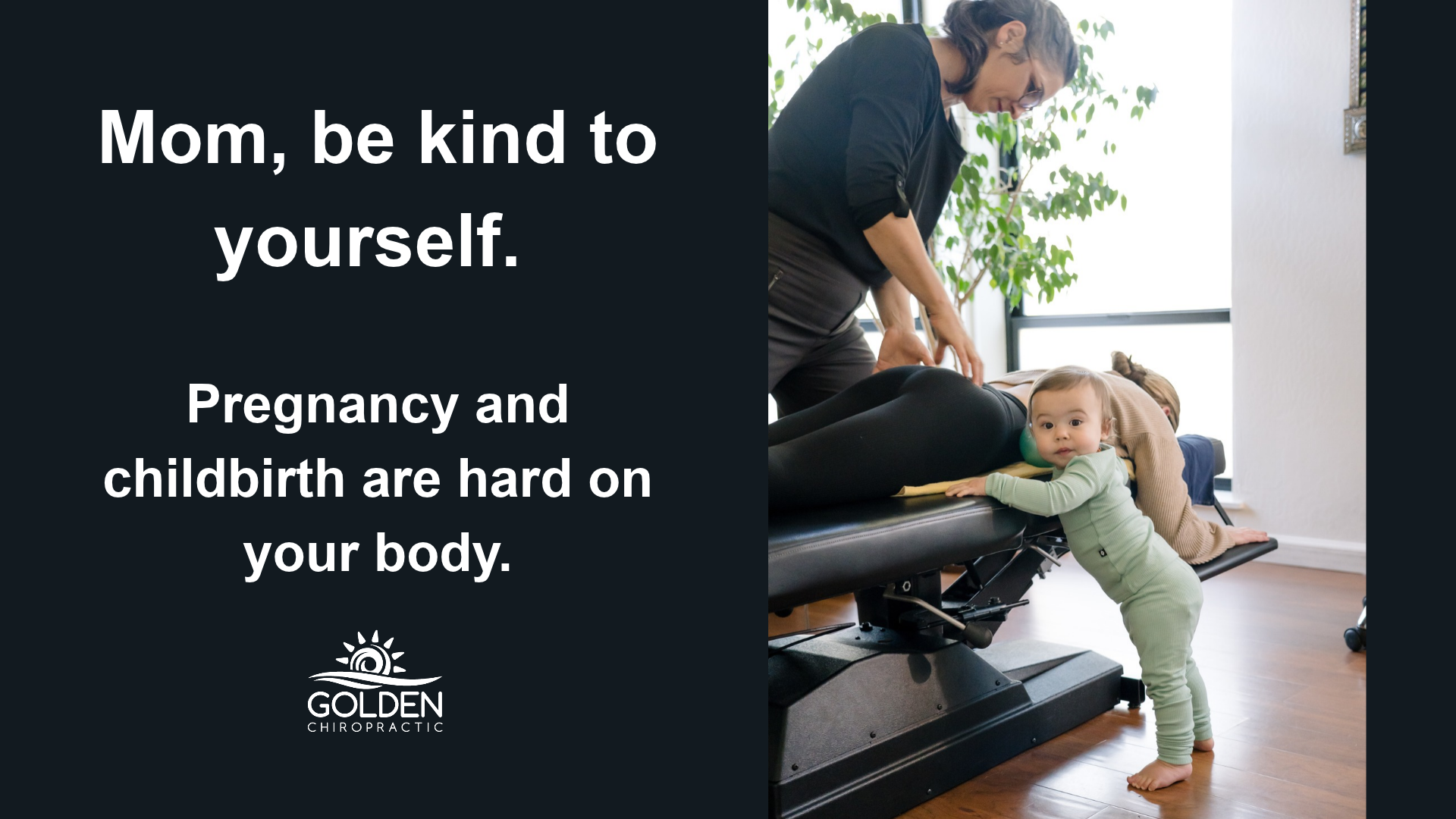
Scheduling online is pretty easy. And you can bring your baby, too! We’d love to see you both.