
03/25/2026 by Dr. Goldi Jacques-Maynes
Screen Time Has Longterm Effects on Teen Spines
We work, communicate, and seek entertainment on our devices. They are a big part of our lives.
We’re all on our screens. Everyday. Some of us more than others.
Our devices do make life easier, and more fun.
But for teens, screen time can lead to unhealthy musculoskeletal development.
It’s more than just “bad posture,” and parents need to be aware of the consequences.
What is constant screen time doing to your teen’s body?
Teenagers often show up in our office with:
- Tight shoulders
- Neck tension
- Headaches
- Rounded-forward posture
These symptoms are becoming more and more prevalent, but they didn’t show up overnight.
Our kids' bodies were never designed to hold certain postures for hours a day.
They were designed to actively move through a full range of motion.
If we’re not careful with how they use their devices, overtime their growing bodies will pay the price.
What’s happening when your teen is on their phone for hours?
This isn’t just about screen time.
It’s about how their body is positioned, day after day, during key developmental stages.
When your teen’s head drops forward, their:
- Neck and upper back take on more load
- Muscles start to fatigue
- Ligaments begin to stretch and lose support
- Spine starts adapting to that position
Long-term, these stresses affect the shape and functioning of their spine and connective tissues.
There are early signs that most parents notice.
You might already be seeing this:
- Slouching when they sit or stand
- Complaints of neck or upper back pain
- Constant shoulder rolling or neck stretching
- Headaches after long screen sessions
- Trouble sitting upright for long periods
- Low energy or fatigue
These aren’t “growing pains.” They’re the signs that your teen’s spine is under strain.
Spinal strain from devices is especially hard on teen bodies, because they are still developing.
Their spines are adaptable, which means:
- They can improve quickly with the right support
- But they can also adapt to unhealthy patterns just as quickly
Add in:
- Hours of schoolwork on screens
- Social connection happening through devices
- A culture that normalizes constant scrolling
… and you have a perfect storm for long-term postural change.
Tech use isn’t inherently bad.
We just need to recognize that devices and apps weren't designed with the health of growing bodies in mind.
The long-term effects of prolonged screen use are showing up earlier and earlier.
This is a social signal we really shouldn't ignore.
What used to show up primarily in adults in the tech industry is now showing up in teens and young adults.
Symptoms of improper tech use include:
Chronic neck and back pain
Pain that doesn’t just come and go—it becomes part of their normal.
Forward head posture and rounded shoulders
It’s not just a habit, but a structural pattern.
Decreased lung capacity
Slouched posture limits how deeply they can breathe.
Frequent headaches and tension
These are caused by constant muscle strain and nervous system stress.
Reduced strength and resilience
The muscles that should support the spine aren’t doing their job.
Over time, this creates a cycle:
Pain leads to slouching.
Slouching leads to more pain.
More pain leads to less movement.
Less movement leads to more screen time.
It’s a hard cycle to break without the right support and interventions.
These negative patterns don’t just disappear when kids turn 18.
They often turn into:
- Chronic pain in early adulthood
- Reduced confidence in their body
- Less participation in sports or healthy physical activities
- Long-term spinal issues that take more work to unwind
And as a parent, I know: That’s not what you want for your child.
The good news is that teen bodies are incredibly adaptable.
Parents tend to feel hopeful and optimistic when we work with their teen to reverse these negative patterns.
When we intervene early:
- Posture can improve
- Pain can decrease
- Strength can build
- Awareness and good habits become second nature
Small changes now can create a completely different, healthier future.
What you can start doing now, at home, to help your teen develop healthier screen habits.
You don’t have to abolish screens at home, and you don’t have to overhaul everything.
You can start small:
- Encourage holding devices at eye level
- Remind them to sit upright without tension
- Build in breaks every 20–30 minutes
- Prioritize movement outside of screens
- Encourage them to use supportive positions, like lying on their stomach with elbow
- support
Remember, you’re not aiming for perfect posture.
You’re trying to create awareness around protecting your spine and avoiding a lifetime of pain.
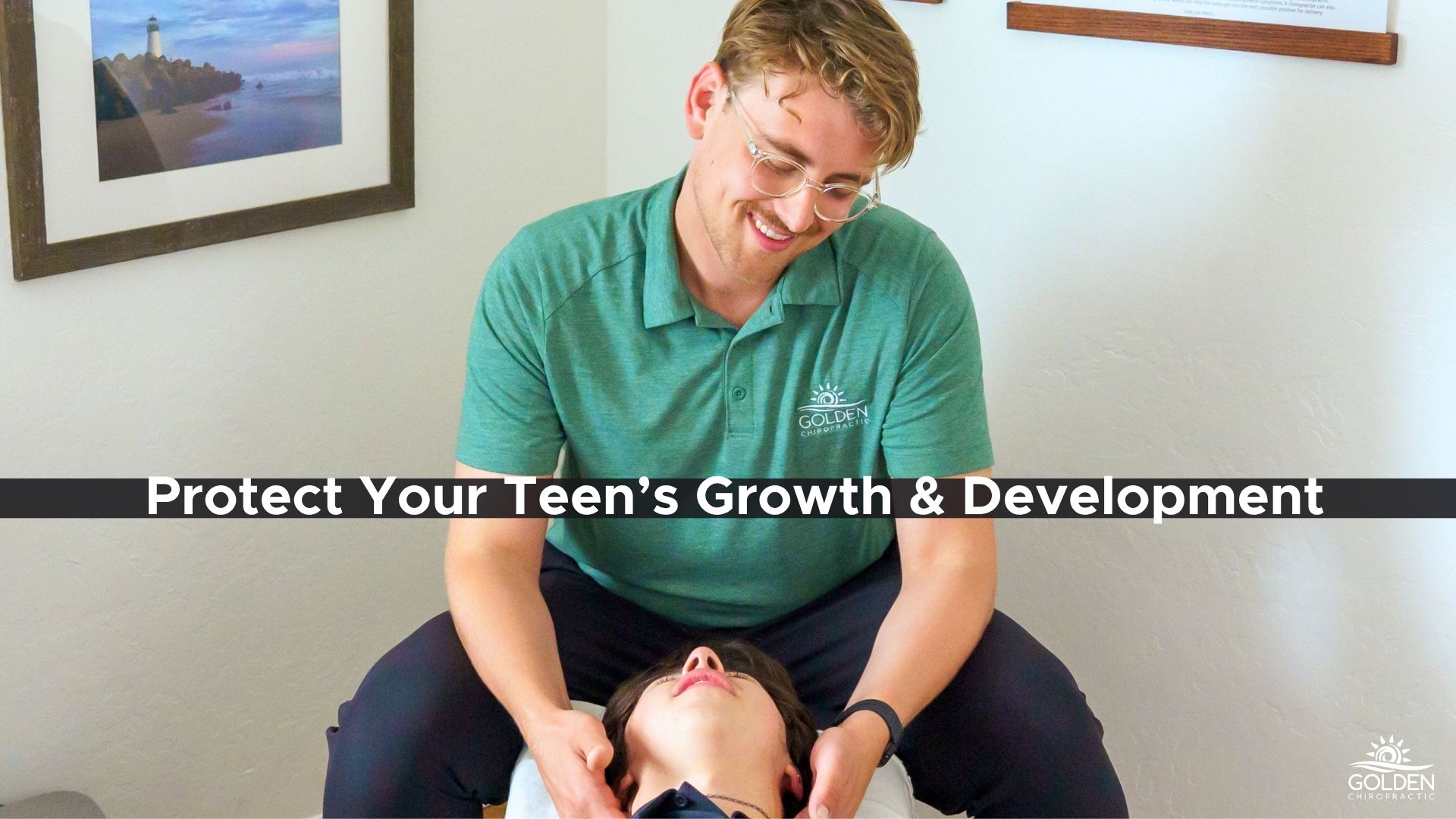
Chiropractic also supports a teen’s growing spine.
When it comes to working with teens, we generally focus on these health goals:
- Restore movement in the spine
- Reduce muscle tension
- Support healthy spinal curves
- Help the nervous system regulate stress
- Give your teen a better sense of how their body should feel
And just as important—we help them understand their body.
That awareness creates a lifetime of healthy habits that influence healthy development.
When teens start to see postural improvement, their:
- Shoulders naturally move down and back
- Breathing gets deeper
- Headaches ease
- Energy improves
- Confidence grows
We aim to influence posture so they can move more positively through their world.
Supporting happy and healthy growth is our job as family chiropractors.
If you’re worried about your teen’s posture, sooner is better than later.
If you’re noticing slouching, neck pain, or constant shoulder tension, it’s worth paying attention now.
Here in our Aptos office, our chiropractors work with teens every week to support their growing bodies.
Come see us. We can help.
Book online to help your teen feel better in their body.