
09/09/2026 by Dr. Goldi Jacques=Maynes
Back to School Can Bring New Aches & Pains
School is back in session here in Santa Cruz County.
And that doesn’t just mean a change in scheduling priorities.
For kids and teens, it’s also a pretty big change in physical activity levels.
Most kids go from freedom of movement and summer play to:
Suddenly, spending a whole lot more time sitting.
For many kids and teens, that means sore shoulders, tight necks, headaches, back pain, and posture changes.
Sometimes parents are surprised that something as ordinary as going back to school can contribute to pain and discomfort. But—
Think about what school asks their growing bodies to do all day.
They’re sitting at desks. Looking down at laptops and tablets. Doing homework. And carrying heavy books and school supplies.
As parents, it’s up to us to check in with our kids about how these changes are affecting them.
The first few weeks of school are the best time to check in with your child.
How is their body feeling now that school is back in session?
A good place to start is the weight increase they're likely carrying.
Your child’s backpack may be too heavy for what their body can manage.
This is the statistic that shocks most parents when I tell them:
Your child’s backpack should weigh no more than about 10–15% of their body weight.
That means an 80-pound child should ideally carry only about 8–12 pounds.
Go pick up your kid’s backpack.
Better yet, weigh it.
Books get heavy fast.
Then add a laptop or tablet, notebooks, binders, water bottle, lunch, sports gear, and whatever else has accumulated in the bottom of the backpack.
That’s a lot of weight!
A heavy backpack puts extra strain on the muscles and joints of a developing body.
Kids may compensate for that weight by leaning forward, arching their lower back, rounding their shoulders, or changing the way they walk.
That can leave them coming home with an aching back, sore shoulders, or a tight neck.
…and PVUSD teens have no lockers!
That means many of my teen patients have to carry all of their materials and gear with them throughout the school day.
So telling them, “Just make your backpack lighter!” isn't always particularly helpful.
Sometimes they simply have a lot to carry.
When that happens, I tell kids to divide the load.
Put some of their materials in their backpack and carry some books in their arms instead of
putting all that weight on their back at once.
Parents can also help kids look for other ways to reduce what they carry.
- Clean out old papers and unnecessary supplies regularly
- Find out whether textbooks are available online
- Keep books at home when they aren't needed at school
- Look for duplicate or used textbooks that can stay at home when practical
- Reassess what actually needs to travel to school every day
Just removing a few pounds can make a big difference.
But the backpack's weight isn't the only thing to worry about.
How your child wears the backpack can cause issues, too.
The backpack should fit their body rather than hanging loosely behind them.
Look for a backpack with wide, padded shoulder straps and a padded back.
The pack shouldn't be wider than your child's torso or hang more than a few inches below their waist.
And please, use both shoulder straps!
Using both straps distributes the load much more evenly.
If the backpack has a chest or waist strap, encourage your child to use that, too.
You can also help them pack smarter.
Put the heaviest items closest to their back and balance the weight between compartments.
And when they pick up a heavy backpack, remind them to bend their knees rather than folding forward at the waist.
Kids carry backpack weight at least five days a week, for years.
Creating healthy backpack habits adds up to big health benefits over time.
So will addressing this other back-to-school health concern:
Most kids are sitting in one position for long periods of time.
Taking all of your joints through their full range of motion daily is an important key to musculoskeletal health.
And kids spend hours sitting at school.
Many come home and sit some more while doing homework, gaming, texting, or watching something on a screen.
That's a lot of time for a growing body to stay in one position.
Ergonomics and movement matter when you're 8 as much as they matter when you're 38.
But you don't need to create a fancy ergonomic workstation for your child.
You just need to help make sure their body feels supported.
One easy guideline is 90-90-90.
When they're sitting at a desk, teach them to aim for:
- Hips bent around 90 degrees
- Knees bent around 90 degrees
- Elbows bent around 90 degrees
- Feet resting on the floor or on a sturdy footrest
- If their feet don't reach the floor, put a box or stack of books underneath them
The desk should be around elbow height so their shoulders can relax instead of creeping toward their ears.
And bring screens up to eye level!
The top of a monitor or tablet should be around eye level, or slightly below it, and roughly an arm's length away.
It's best for kids to avoid hours with their heads dropped forward toward a screen.
Kids also need to move.
Even a beautifully adjusted chair doesn't make sitting for hours ideal.
Bodies are made to move.
Encourage your child to get up when they can.
Remind them to periodically walk around, stretch a little, and occasionally change positions.
Even better: Go outside and play.
At home, a short movement break every 30–60 minutes can give tired muscles a chance to reset.
We don't need kids obsessing about having "perfect posture."
We want them to learn to notice their bodies and change positions before discomfort becomes their new normal.
That's a skill they can carry with them long after they leave school.
And while you’re reminding them to pay attention to how they are holding and moving their body, remind yourself:
Pay attention when your child tells you something hurts or feels off.
Kids don't always describe pain the same way adults do.
Sometimes they'll tell you their backpack is annoying, or their shoulders feel tired.
Sometimes their neck "feels weird."
Maybe they have another headache, or they don't want to carry their stuff.
Listen to those little complaints.
Watch for some of these recurring issues, too:
- Back or neck pain
- Sore or tight shoulders
- Frequent headaches
- Stiffness
- Rounded shoulders or a head that consistently sits forward
- Numbness or tingling in the arms or hands
- Pain that keeps returning after school
Pain is information about how their body is adjusting to changes in their environment, and in their growing bodies.
Get into the habit of checking in with them (and yourself, too!)
Encourage everyone in your family to take care of their body.
One of the things I love about working with kids is that we have an opportunity to teach them these habits early.
Check the backpack together. Weigh it. Adjust the straps.
Ask your child where they feel tired or sore after school.
Look at where they do their homework.
And keep the conversation going.
The goal isn't to make kids afraid of backpacks, screens, or sitting. These things are part of their lives.
The goal is to empower them to optimize their days to promote their best health for life.
You can help them understand their bodies well enough to notice when something isn't working—and to know that they can do something about it.
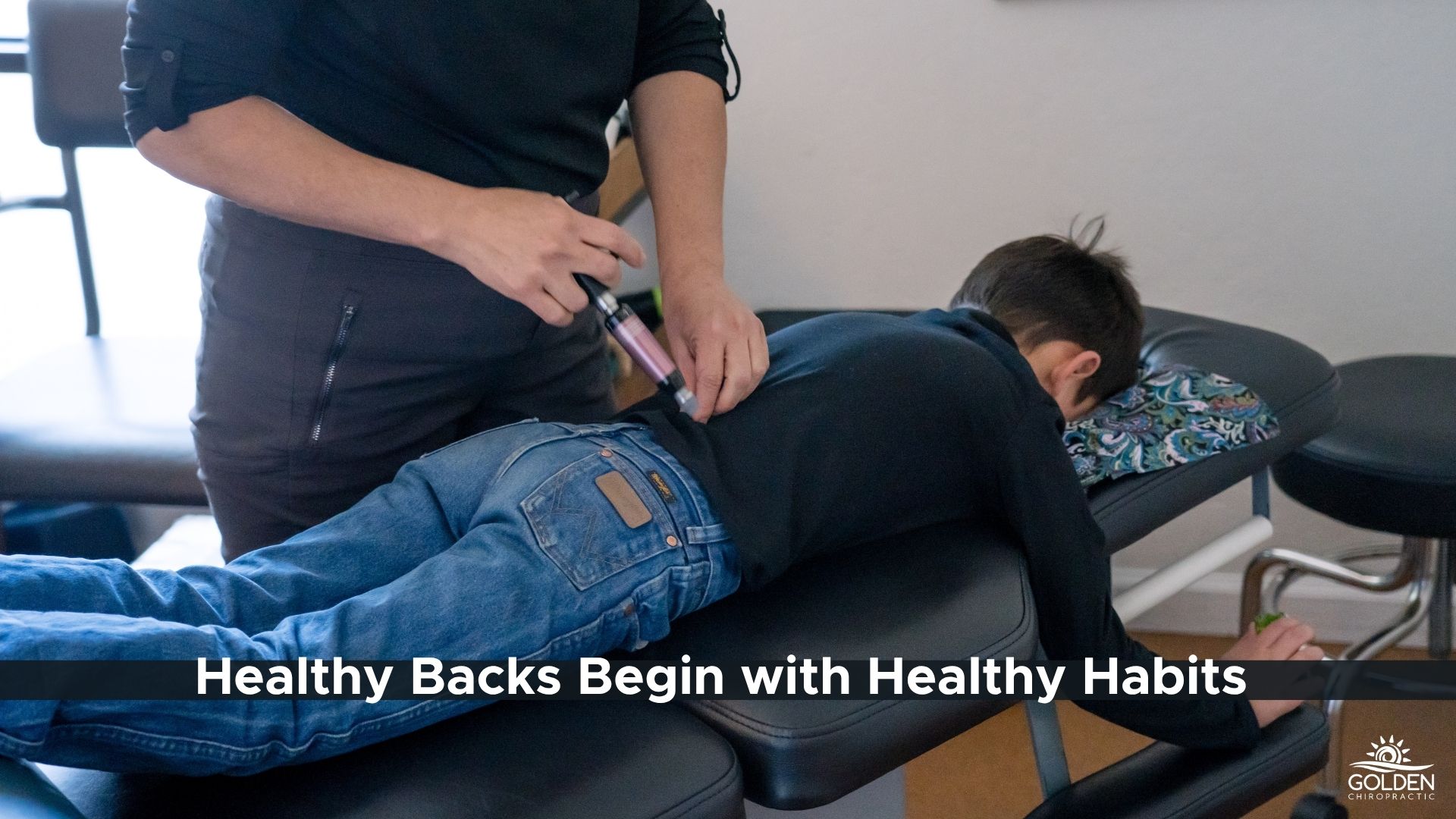
And if your child is regularly complaining about back pain, neck pain, headaches, or discomfort, we can help you figure out what's going on.
We work with kids and teens to address musculoskeletal pain and help families build healthier movement and posture habits as kids grow.
Are your kids complaining about aches, pains, or headaches?
Schedule an appointment online with one of our chiropractors at Golden Chiropractic in Aptos.