
05/14/2026 by Dr. Joe Bell
A Better Quality of Life with Spinal Stenosis is Possible
I treat a lot of seniors at Golden Chiropractic.
I love getting to know my older patients, and enjoy forming relationships with them.
Treating their pain and helping them enjoy life is the best part.
Along with stories about life and learning, I hear about symptoms common to many seniors:
“My legs feel heavy when I walk.”
“I feel numbness creeping into my feet.”
“I need to lean forward on my shopping cart just to get through the grocery store.”
Many of my patients assume these changes are simply “part of getting older.”
They push through the discomfort for months, or even years, before seeing someone who can help.
I wish more seniors would realize that persistent leg pain, weakness, numbness, or difficulty walking comfortably should be checked out.
Especially because there’s a chance spinal stenosis may play a part in their symptoms. And that's not good.
Ignoring symptoms related to spinal stenosis can gradually lead to more and more problems.
Simple things like standing to cook dinner, gardening, walking the dog, or spending time with grandchildren can start to feel frustrating and physically draining.
Over time, many seniors begin losing confidence in their body.
The loss of independence in daily life can cause a lot of stress and sadness, too.
But there are ways to help improve comfort, movement, and quality of life.
Spinal stenosis symptoms CAN become more manageable.
So, what exactly is spinal stenosis?
Spinal stenosis is the narrowing of the spinal canal.
Your spinal canal is the space inside your spine where the spinal cord and nerve roots travel.
When that space becomes smaller, the nerves can become irritated or compressed.
This narrowing may happen because of:
- Arthritis and age-related degeneration
- Bone enlargement or bone spurs
- Inflammation
- Previous injuries or surgeries
- Congenital structural differences
Spinal stenosis most commonly affects the lumbar spine (low back), followed by the cervical spine (neck).
Age is one of the biggest risk factors for spinal stenosis.
The condition becomes much more common after age 50, especially when arthritis and long-term wear and tear begin changing the structure of your spine.
The person who most shaped how I think about spinal stenosis is my own grandmother.
She’s an 83-year-old retired middle school science teacher who developed lumbar spinal stenosis.
At first, the symptoms seemed manageable.
She would wake up with pins and needles sensations in her legs and feet—mostly on the right side, but sometimes both sides.
Walking or standing for too long caused aching, heaviness, and fatigue in her legs.
Over time, I noticed she started leaning forward constantly.
Shopping carts became especially helpful for her. Leaning forward temporarily relieved the pressure on the nerves in her low back.
Sitting down also helped calm her symptoms.
But eventually the condition started affecting much more than just her back.
She became emotionally exhausted.
After waking up in pain almost every morning for over eight months, she started feeling powerless.
Everyday activities around the house became harder.
Her confidence in her body began disappearing.
And unfortunately, this pattern is incredibly common with spinal stenosis.
Spinal stenosis symptoms often develop gradually over time.
It’s a condition that can start with one or two symptoms, but over time, the symptoms begin to stack up.
Many people describe symptoms like:
- Low back pain
- Pain traveling into the legs
- Numbness or tingling in the feet or legs
- Leg weakness
- Difficulty walking long distances
- Fatigue with prolonged standing
- Balance problems
- Relief when leaning forward or sitting
One hallmark sign of lumbar spinal stenosis is this:
Walking upright becomes uncomfortable, but leaning forward brings relief.
That’s because certain positions can temporarily reduce pressure around the irritated nerves.
For some people, symptoms are mild at first.
Sadly, for many, the condition progressively limits mobility and independence.
Emotionally, many patients also struggle with:
- Fear of falling
- Frustration from losing independence
- Anxiety about worsening symptoms
- Feeling disconnected from activities they once enjoyed
It’s the diminished quality of life that hurts the most.
That's why I always want to encourage seniors with symptoms to seek diagnosis and treatment.
What makes spinal stenosis progressively worsen?
When spinal stenosis is ignored, continued nerve compression can gradually create more problems.
Over time, patients may begin noticing:
- Increased numbness and tingling
- Reduced strength
- Difficulty gripping objects (with cervical stenosis)
- Difficulty pushing off while walking (with lumbar stenosis)
- Muscle weakness and atrophy
- More instability and balance issues
I saw this progression happen with my grandmother as well.
The farther she walked, the more fatigued her legs became.
Standing for prolonged periods became difficult.
She relied more heavily on forward-flexed posture simply to stay comfortable.
When people begin compensating like this for long periods of time, movement patterns often become less efficient and recovery becomes harder.
That’s why it’s important to not simply “wait it out.”
Spinal stenosis can become a serious neurological issue when compression becomes severe.
There are times when you absolutely should listen to your body—NOW!
Signs that you need immediate help include:
- Loss of bowel or bladder control
- Numbness in the groin or saddle area
- Rapidly worsening leg weakness
- Loss of sexual function
One condition we are always careful to screen for is cauda equina syndrome.
This is an advanced neurological emergency caused by severe compression near the lower end of the spinal cord.
While rare, it requires immediate medical care.
If your symptoms are progressing rapidly, do not delay evaluation.
A conservative care approach can help manage spinal stenosis symptoms.
When it comes to non-invasive treatment for spinal stenosis, it’s important to manage expectations.
Conservative care does not physically reverse spinal stenosis.
The narrowing of the canal itself does not simply disappear without surgery.
However, many patients can still experience meaningful improvement in symptoms and daily function.
For my grandmother, one of the first improvements was a reduction in the frequency and intensity of the pins and needles sensations in her legs.
Over time, she was able to:
- Walk longer distances more comfortably
- Stand for longer periods without needing immediate rest
- Feel more confident moving around the house
- Reduce reliance on constantly leaning forward
- Improve her overall quality of life
For many patients, a better quality of life is the biggest win.
When spinal stenosis no longer controls every part of their day, seniors begin to enjoy life a lot more.
This is how we manage conservative care for spinal stenosis:
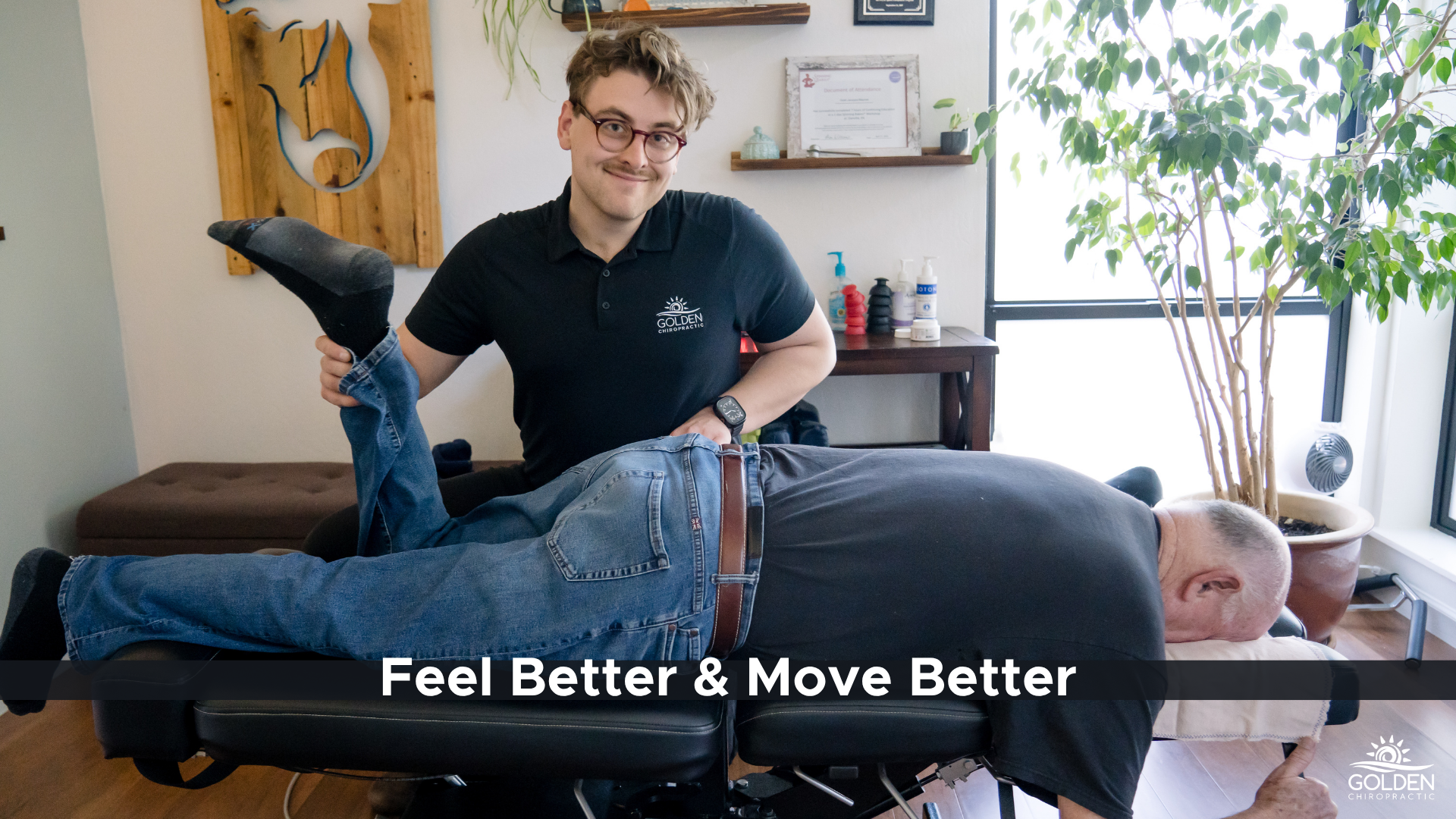
At Golden Chiropractic, our approach focuses on helping patients move more efficiently and comfortably.
Depending on the patient, care may include:
- Chiropractic adjustments
- Soft tissue therapy
- Movement guidance
- Postural education
- Exercises to support mobility and stability
The goal is not perfection.
The goal is helping patients maintain independence, improve confidence in movement, and reduce the day-to-day burden of symptoms.
When spinal stenosis symptoms become more manageable, patients often:
- Walk farther without stopping constantly
- Stand comfortably while cooking
- Sleep better without pain interruptions
- Feel steadier and more stable
- Garden again
- Travel more comfortably
- Spend quality time with family
- Play with grandchildren without fear or exhaustion
Sometimes the biggest victories are the ones that bring back life’s simple pleasures.
Should you get evaluated for spinal stenosis?
If you’re dealing with:
- Persistent back or leg pain
- Numbness or tingling
- Weakness
- Difficulty standing or walking
- Symptoms that are affecting sleep, balance, or independence
…it may be time to get your spine evaluated.
At Golden Chiropractic, our goal is to listen, understand what you’re experiencing, and determine whether chiropractic care may be a good fit for your condition.
During your visit, we’ll take time to:
- Review your symptoms and health history
- Evaluate how your spine and nervous system are functioning
- Identify possible causes of your discomfort
- Explain everything clearly and honestly
- Discuss recommendations based on your goals and comfort level
We want you to know there is hope for a better quality of life.
Many of our senior patients enjoy fuller, richer lives. If you’re a senior experiencing pain or discomfort that is seriously limiting you, we’ll try to help.
Book online to see one of our highly qualified chiropractors. We're right here in Aptos.